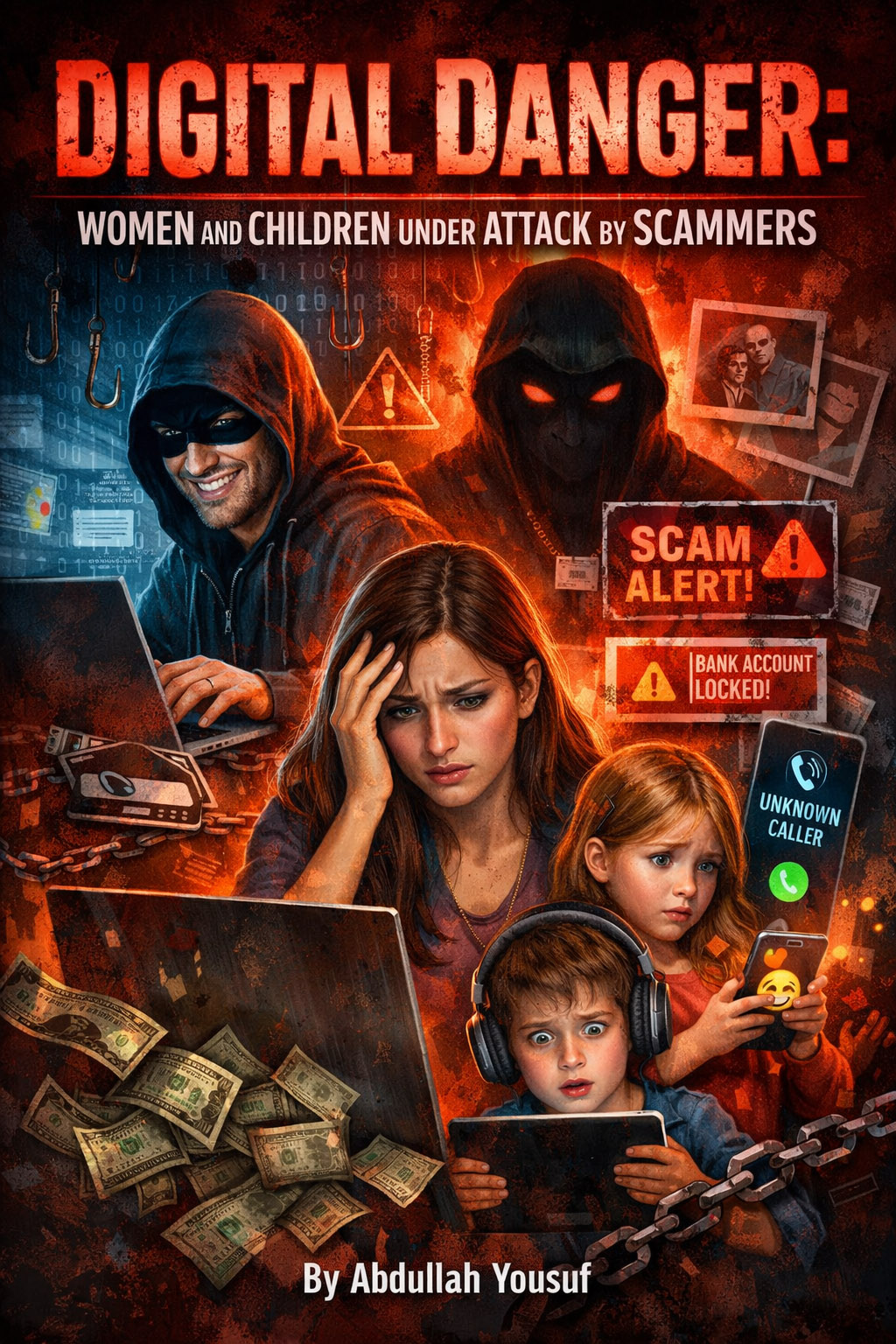
Abdulllah Yousuf : In today’s hyper-connected world, digital platforms have become an essential part of daily life. From communication and education to entertainment and business, the internet offers enormous opportunities. However, alongside these benefits comes a growing and alarming threat: cybercrime targeting women and children. Across Australia and around the world, scammers, hackers, and online predators are increasingly exploiting vulnerable users—particularly women and young people—through sophisticated and often devastating digital attacks.
Women and children are among the most active users of social media platforms. Whether it is sharing personal moments, engaging with friends, building professional networks, or participating in online learning, digital presence has become routine. Unfortunately, cybercriminals see this presence as an opportunity. Online scams, identity theft, phishing schemes, cyberbullying, financial fraud, and even sexual exploitation are rising at an unprecedented rate.
One of the most common threats facing women online is financial and emotional fraud. Romance scams, for example, are specifically designed to manipulate emotions. Scammers create fake identities, build trust over weeks or months, and eventually request money under false pretenses. Many women have lost life savings to such schemes. These criminals operate with calculated precision, often using stolen photographs and fabricated stories to appear genuine. Beyond financial loss, the psychological trauma can be long-lasting, damaging confidence, mental health, and trust.
Children and teenagers are equally at risk. Young people often lack the life experience to recognize deception or manipulation online. Cyberbullying has become a major social issue, with harmful messages, public humiliation, and online harassment causing severe emotional distress. In extreme cases, it has led to depression, anxiety, and self-harm. Additionally, online gaming platforms and social networks can expose children to predators who disguise themselves as peers.
Another growing concern is hacking and data breaches. Personal photos, private conversations, and sensitive information can be stolen and misused. Women are disproportionately targeted in cases of image-based abuse, sometimes known as “revenge porn,” where private images are shared without consent. Such violations can destroy reputations, careers, and emotional wellbeing. For children, the risks include identity theft, where stolen personal details are used for fraudulent activities.
Artificial intelligence and advanced technology have made scams even more convincing. Deepfake videos, voice cloning, and highly realistic phishing emails can deceive even cautious users. Criminal networks now operate internationally, making it harder for local authorities to trace and prosecute offenders. The digital battlefield has become more complex, requiring stronger laws and smarter protection strategies.
Recognizing the severity of these threats, the Australian Government has taken steps to enhance online safety. Under the leadership of Anthony Albanese, online safety reforms have been strengthened to protect vulnerable groups. The government has shown commitment to addressing cybercrime, harmful online content, and social media accountability. Public awareness campaigns and stricter penalties for offenders demonstrate a proactive approach to digital protection.
One significant initiative is Australia’s move toward regulating social media access for minors. The government has introduced laws and policy measures aimed at preventing children under 18 from accessing certain social media platforms without proper safeguards. This decision reflects a growing recognition that young people require additional protection in the digital environment. By placing responsibility on tech companies to verify age and strengthen safety features, policymakers are prioritizing the wellbeing of children.
The role of the eSafety Commissioner has also become increasingly important. This independent regulator works to remove harmful online content, educate the public about digital risks, and support victims of cyber abuse. Through reporting mechanisms and awareness programs, Australian families now have clearer pathways to seek help when facing online threats.
However, legislation alone cannot solve the problem. Parents, schools, and communities must also take responsibility. Digital literacy education is essential. Children should be taught from an early age how to identify suspicious messages, protect their personal information, and report inappropriate behavior. Women, especially those new to digital platforms, should be encouraged to use privacy settings, enable two-factor authentication, and verify identities before engaging in financial transactions online.
Technology companies must also do more. Social media platforms generate enormous profits from user engagement, and with that profit comes responsibility. They must invest in stronger moderation systems, artificial intelligence detection tools, and transparent reporting systems. Failing to act decisively not only endangers users but also undermines public trust.
Community support plays a vital role in helping victims recover. Women who experience online scams or harassment often feel embarrassed or ashamed, which prevents them from reporting incidents. Society must shift its attitude to recognize that the blame lies solely with the criminals. Encouraging open discussion, providing counseling services, and ensuring confidential reporting systems can make a significant difference.
Ultimately, cyber security is not just a technical issue—it is a human rights issue. Women and children deserve to feel safe, respected, and protected in both physical and digital spaces. As technology continues to evolve, so must our commitment to safety and accountability.
The Australian Government’s efforts to strengthen online safety laws are a positive step forward. Strong leadership, combined with community awareness and corporate responsibility, can create a safer digital future. Protecting women and children from cybercrime is not optional—it is a moral obligation. By working together, Australia can continue to lead by example and ensure that the internet remains a space for opportunity, not exploitation.To truly protect women, children, and the broader community from cybercrime, awareness must move beyond occasional warnings and become a national priority. We need large-scale, sustained anti-scam campaigns that reach people where they actually spend their time — online, on television, in schools, and within local communities.
A one-time announcement is not enough. Cybercriminals are constantly evolving their tactics, so public education must also be continuous and dynamic. The government, in partnership with regulators such as the eSafety Commissioner and consumer protection bodies, should invest in nationwide anti-scam promotions across television, radio, social media, and public transport networks. Clear, simple messages explaining common scam methods — romance scams, phishing emails, fake investment schemes, impersonation calls — can empower people to recognize red flags before it is too late.
Social media campaigns are especially critical. Short reels, engaging videos, and real-life testimonials can have a powerful impact, particularly among young people. A 30-second reel demonstrating how a scammer manipulates emotions can be more effective than a long written warning. Short drama series or mini-documentaries based on true stories could highlight the emotional and financial devastation caused by scams. When people see realistic scenarios that reflect their own experiences, the message becomes personal and memorable.
Workshops should also be conducted regularly in schools, universities, community centers, and workplaces. Digital literacy must be treated as an essential life skill, just like financial literacy. Students should learn how to protect personal information, verify online identities, and report suspicious activity. For older members of the community — who are often heavily targeted by scammers — in-person workshops with practical demonstrations can significantly reduce vulnerability.
Importantly, these initiatives must be inclusive and multilingual. Australia is a multicultural society, and scam awareness materials should be available in community languages to ensure no one is left behind. Many victims come from culturally and linguistically diverse backgrounds, where language barriers may prevent them from accessing critical information.
The government can also partner with influencers, community leaders, and faith-based organizations to spread awareness. Trusted voices within communities can deliver safety messages more effectively than formal announcements alone. Collaboration with banks, telecommunications companies, and technology platforms is equally essential. Real-time scam alerts through SMS, banking apps, and social media notifications can prevent financial loss before transactions are completed.
Leadership at the national level is crucial. Under Prime Minister Anthony Albanese, Australia has taken important steps toward strengthening online safety laws. However, the scale of the scam epidemic demands an even broader, more coordinated initiative — one that combines legislation, enforcement, and mass public education.
The financial cost of scams in Australia reaches billions of dollars each year, but the emotional cost is even greater. Victims often lose their life savings, retirement funds, or business capital. Many suffer anxiety, depression, and long-term trauma. Prevention, therefore, is not just about protecting money — it is about protecting dignity, mental health, and family stability.
A national anti-scam strategy should include:
Continuous television and digital advertisements explaining current scam trends.
Short, relatable drama productions and online reels for social media platforms.
Regular free community workshops and school programs.
Stronger partnerships between government agencies, community organizations, community media and tech companies.
Easy and confidential reporting systems with rapid response support.
If we truly want to stop people from losing everything, we must treat cybercrime prevention as a public safety emergency. Just as road safety campaigns reduced traffic fatalities through consistent education and enforcement, a comprehensive anti-scam movement can significantly reduce digital victimization.
Awareness is power. Education is protection. And collective action is the only way forward. By investing in widespread, creative, and sustained anti-scam initiatives, the government can save countless individuals and families from financial ruin and emotional devastation — building a safer, smarter, and more resilient Australia for everyone.