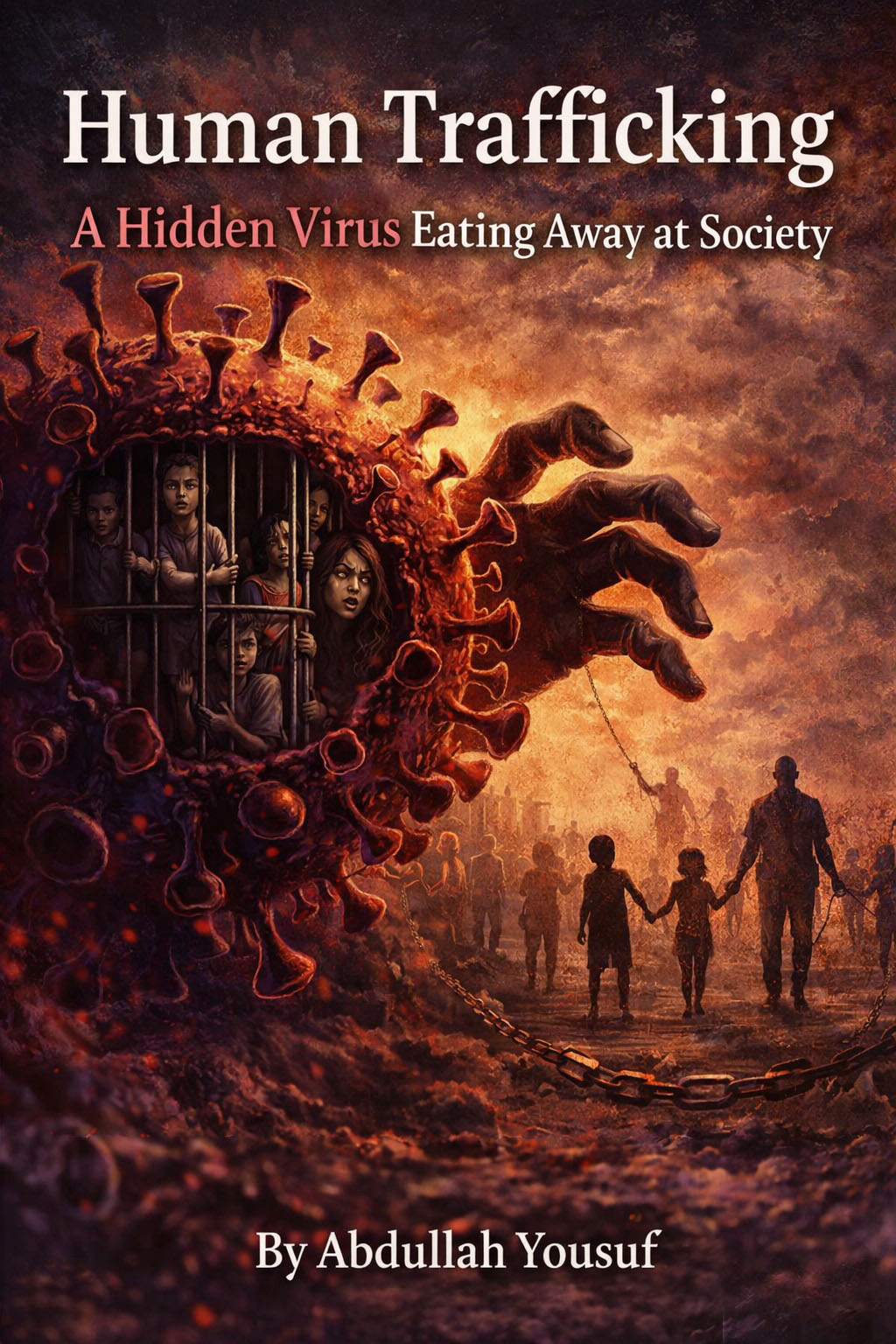
 By Abdullah Yousuf: Human trafficking is one of the most serious and yet most hidden crimes in today’s world. It operates quietly, preying on desperation, poverty, and broken dreams, often beyond the reach of public attention and justice.
Every year, thousands of people from low-income countries attempt to migrate to high-income nations in search of safety, dignity, and a better future. For many in South Asia and Southeast Asia—particularly from Bangladesh, India, Pakistan, Vietnam, and Myanmar, economic hardship, political instability, unemployment, and social inequality make survival at home increasingly difficult. Migration begins to look like the only path forward.
Criminal networks exploit this vulnerability. Human traffickers, also known as slave traders or human dealers—present themselves as helpers or “agents,” promising easy access to countries such as Australia, the United States, Canada, New Zealand, Japan, and Europe. They paint a glowing picture: well-paid jobs requiring no experience, monthly incomes of thousands of dollars, and a fast track to permanent residence. For people struggling to meet daily needs, these promises sound like a “golden deer” too attractive to ignore.
Victims are asked to pay enormous sums, often between USD 15,000 and 30,000, sometimes more. To raise this money, families sell businesses, land, vehicles, livestock, and even their wives’ jewellery. Some take high-interest loans, believing that once they reach the destination country, they will quickly earn back double what they spent. What follows is not opportunity, but disaster.
In many cases, traffickers disappear after collecting the money. Victims are left penniless, humiliated, and broken. Some fall into deep depression; others tragically take their own lives. These traffickers are not merely criminals they are enemies of humanity, society, and the nation. They destroy lives without remorse and must face severe punishment. Where laws are weak, they must be strengthened to ensure exemplary consequences that deter others.
Human trafficking networks are sophisticated and well-connected. Many brokers operate openly in Bangladesh, India, Pakistan, Vietnam, and Myanmar, protected by corruption and links to powerful officials. Others live comfortably in so-called “safe countries” like Australia, coordinating operations remotely using fake social media identities. Men and women alike act as brokers, supported by layers of sub-agents who recruit victims and earn commissions per person.
Victims are often moved through transit countries such as Thailand, Hong Kong, India, or Indonesia. They may be held in secret warehouses or farmhouses while traffickers coordinate the next stage of the journey. Eventually, some are transported by ship, cargo container, or plane under dangerous and illegal conditions. Upon arrival in destination countries, they are frequently detained. At this point, local brokers step in, coaching detainees on what to say, how to apply for protection, and how to secure release.
In some cases, traffickers arrange sham marriages with citizens or permanent residents, charging tens of thousands of dollars for contracts that last until permanent residency or citizenship is granted. Victims, having no options and no power, are forced to comply while brokers take most of the money.
To attract new victims, these networks produce highly polished and misleading videos glorifying life in Australia and other wealthy nations. These videos, circulated widely across South Asia, the Middle East, and beyond, are built on lies and deception. Ill-informed and uneducated people fall into these traps, losing everything they have worked for.
Perhaps the most disturbing reality is that many traffickers live among us. They attend community events, socialise freely, and appear respectable. Governments struggle to identify them, and law enforcement often arrives too late. This is why community awareness is critical. Concerned citizens must refuse to associate with known or suspected traffickers—do not invite them, support them, or sit beside them in social spaces.
In some of the cruellest cases, brokers take money from victims, escort them to a foreign airport, such as in Thailand or Hong Kong, and abandon them there. Many of these victims have never travelled outside their home country before. Lost, frightened, and without resources, they become invisible casualties of a global crime.
Human trafficking is a hidden virus. It thrives in silence, corruption, and indifference. To stop it, governments must act decisively, laws must be enforced without fear or favour, and communities must stand united against those who profit from human misery. Only then can this silent epidemic be exposed and defeated.