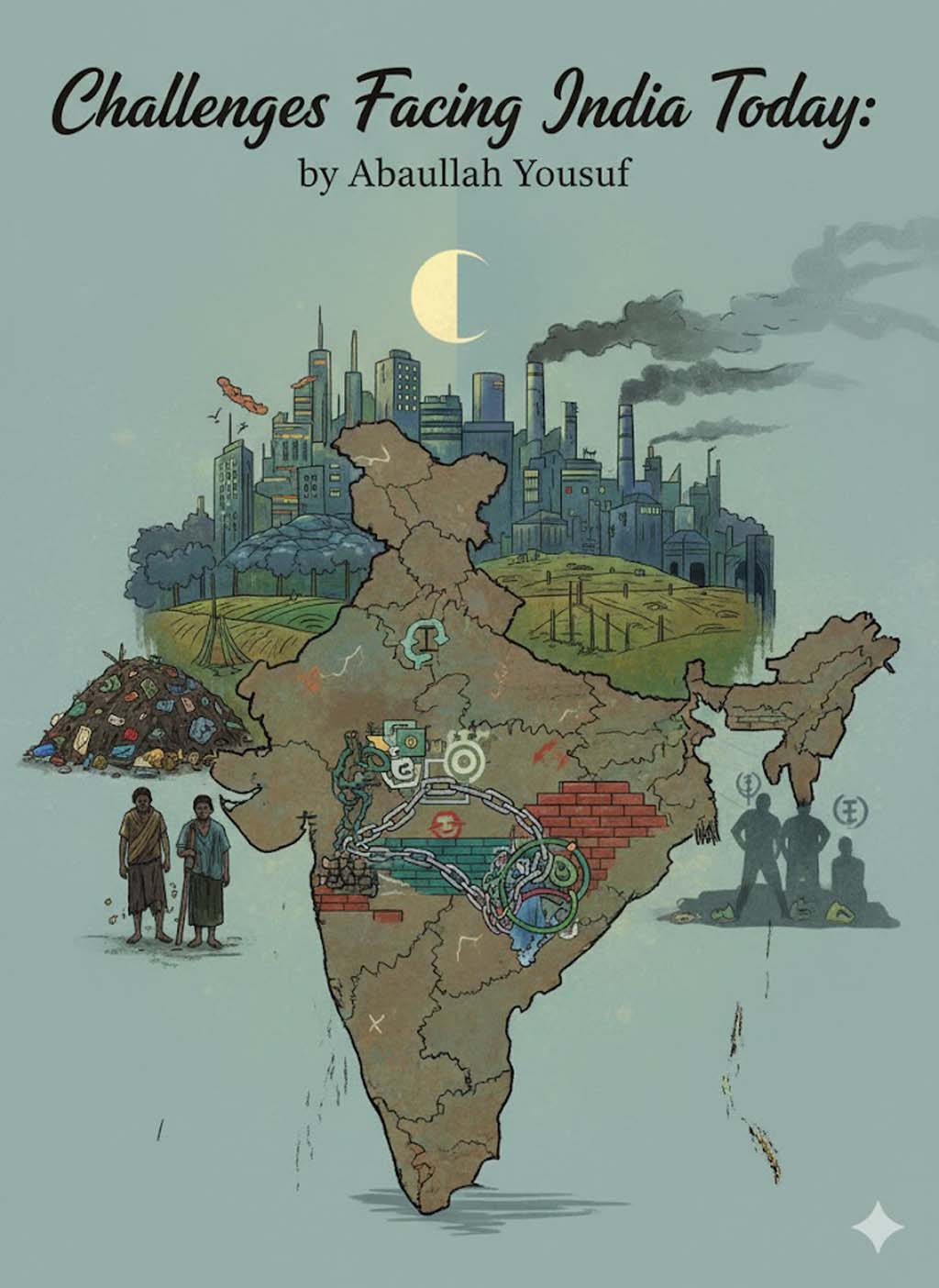
 Unemployment, Pollution, and Healthcare Struggles
by Abdullah Yousuf: India, one of the growing economies in the world, is a nation of immense potential, cultural heritage, and a youthful population. Yet, despite remarkable progress in various sectors, the country faces several pressing challenges that affect the lives of millions of its citizens. Among these, unemployment, environmental pollution, and the strain on the healthcare system stand out as critical issues requiring urgent attention.
Unemployment and Lack of Job Opportunities for Youth
One of the most pressing concerns in contemporary India is the high rate of unemployment, particularly among young people. With over 50% of India’s population under the age of 25, the country has one of the largest youth populations in the world. While this demographic presents a significant opportunity for economic growth, it simultaneously creates a challenge: providing adequate employment opportunities for millions of young job seekers entering the workforce each year.
The situation is compounded by the mismatch between the skills possessed by graduates and the requirements of the modern job market. While India produces millions of graduates annually, many lack the technical expertise or practical experience demanded by employers, particularly in technology-driven industries. As a result, a significant portion of the youth faces long periods of joblessness, often accepting underpaid or informal work that does not provide financial stability or career growth.
Additionally, traditional sectors such as agriculture, manufacturing, and small-scale industries have struggled to absorb the growing labor force. Even with government initiatives like “Make in India” and “Startup India,” which aim to promote entrepreneurship and industrial growth, the impact has been limited. Without substantial investment in skill development programs, vocational training, and job-creating industries, the unemployment problem is likely to persist, potentially leading to social unrest and economic stagnation.
Air and Water Pollution: An Environmental Crisis
Another grave challenge confronting India is environmental pollution, particularly in the northern regions and major urban centers like Delhi. Air pollution in India has reached alarming levels, with cities frequently topping global charts for poor air quality. The burning of crop residue, emissions from vehicles, industrial pollution, and construction dust contribute significantly to the crisis. During winter months, smog blankets northern India, posing severe health risks including respiratory diseases, cardiovascular problems, and a reduced life expectancy.
Water pollution is an equally serious concern. Rivers, lakes, and groundwater in many parts of the country are contaminated by industrial effluents, untreated sewage, and chemical runoff. The Ganges, India’s most iconic river, continues to face severe pollution despite numerous cleanup efforts. Contaminated water sources lead to waterborne diseases such as cholera, diarrhea, and hepatitis, particularly affecting rural populations with limited access to safe drinking water.
The environmental degradation also affects agriculture, biodiversity, and the overall quality of life. The government has introduced measures such as stricter emission norms, promotion of electric vehicles, and campaigns to clean rivers. However, enforcement remains inconsistent, and public awareness about sustainable practices is still insufficient. Addressing pollution requires coordinated action between policymakers, industries, and citizens to implement long-term, effective solutions.
Healthcare System Under Strain
The third significant challenge India faces is the ongoing strain on its healthcare system. Despite improvements over the years, the country’s healthcare infrastructure continues to struggle with limited resources, understaffed hospitals, and unequal access to medical services. Public healthcare facilities, especially in rural areas, often lack essential medicines, equipment, and trained personnel, forcing many patients to rely on private hospitals, which are often expensive and inaccessible for low-income families.
The COVID-19 pandemic exposed vulnerabilities in India’s healthcare system, highlighting the need for robust emergency preparedness, better hospital capacity, and equitable distribution of medical resources. Chronic diseases, malnutrition, and inadequate maternal and child care add further pressure to the system. Additionally, mental health services remain grossly insufficient, despite rising awareness about the importance of mental well-being.
Efforts have been made to expand healthcare coverage through initiatives like Ayushman Bharat, which provides health insurance for underprivileged citizens, and the National Health Mission, which focuses on improving rural healthcare infrastructure. However, implementation challenges, corruption, and funding limitations continue to hamper progress. Strengthening healthcare requires sustained investment, skilled medical personnel, modern facilities, and widespread public health education.
India’s Struggle with Cleanliness and Sanitation : Dirtiest Country In the World!
India faces serious challenges in terms of cleanliness and sanitation. While environmental pollution is a major concern, the issue goes beyond air and water quality. Streets and public spaces in many cities and towns are often littered with garbage and human and animal waste. Certain traditional practices, such as the use of cow urine or cow dung for perceived health benefits, have also drawn attention during the COVID-19 pandemic.
Poverty exacerbates the situation. Many children, lacking basic resources, are forced to scavenge through large piles of waste to find usable materials or food. These waste-filled areas, often infested with rodents, pose serious health risks and contribute to the spread of diseases among vulnerable populations.
The problem is widely acknowledged even within India. Mohan Guruswamy, writing in the Indian magazine The Citizen on December 10, 2020, noted:
“The influential magazine ‘The Economist’ recently carried a story about India’s environment: ‘Why is India one of the most polluted countries on Earth?’ The ‘Economic Times’ followed with a story headlined ‘India alarmingly filthy even by standards of poor countries.’ Nobody living here can deny it.”
Addressing these issues requires large-scale improvements in public sanitation, waste management, and awareness campaigns to encourage hygienic practices. While India has made progress in recent years through initiatives like the Swachh Bharat Abhiyan (Clean India Mission), significant challenges remain, particularly in urban slums and rural areas. Sustainable solutions must combine government action, community engagement, and behavioral change to create a cleaner, healthier environment for all citizens.
Looking Forward: Solutions and Opportunities
While these challenges are daunting, they are not insurmountable. Tackling unemployment requires a multifaceted approach: promoting entrepreneurship, investing in skill development, aligning education with industry needs, and encouraging sectors that generate large-scale employment. Additionally, technological innovations such as AI, digital services, and renewable energy can create new job avenues for the youth.
Addressing pollution demands stronger regulatory enforcement, promotion of clean energy, sustainable farming practices, and mass public awareness campaigns. Citizens, too, must play a role by adopting environmentally responsible behaviors, reducing waste, and supporting green initiatives.
Strengthening healthcare is equally critical. Increased public spending, expansion of primary healthcare centers, better training for medical professionals, and the use of technology for telemedicine can improve access and quality of care. Furthermore, a focus on preventive healthcare, nutrition, and mental health services is essential for a healthier population.
Conclusion
India stands at a crossroads. Its demographic advantage, economic potential, and cultural wealth provide a solid foundation for growth. Yet, the challenges of unemployment, environmental pollution, and healthcare deficiencies cannot be ignored. Addressing these issues requires a coordinated effort from the government, private sector, civil society, and citizens. By investing in human capital, protecting the environment, and strengthening healthcare, India can not only overcome these challenges but also build a more prosperous, sustainable, and equitable future for all its citizens.