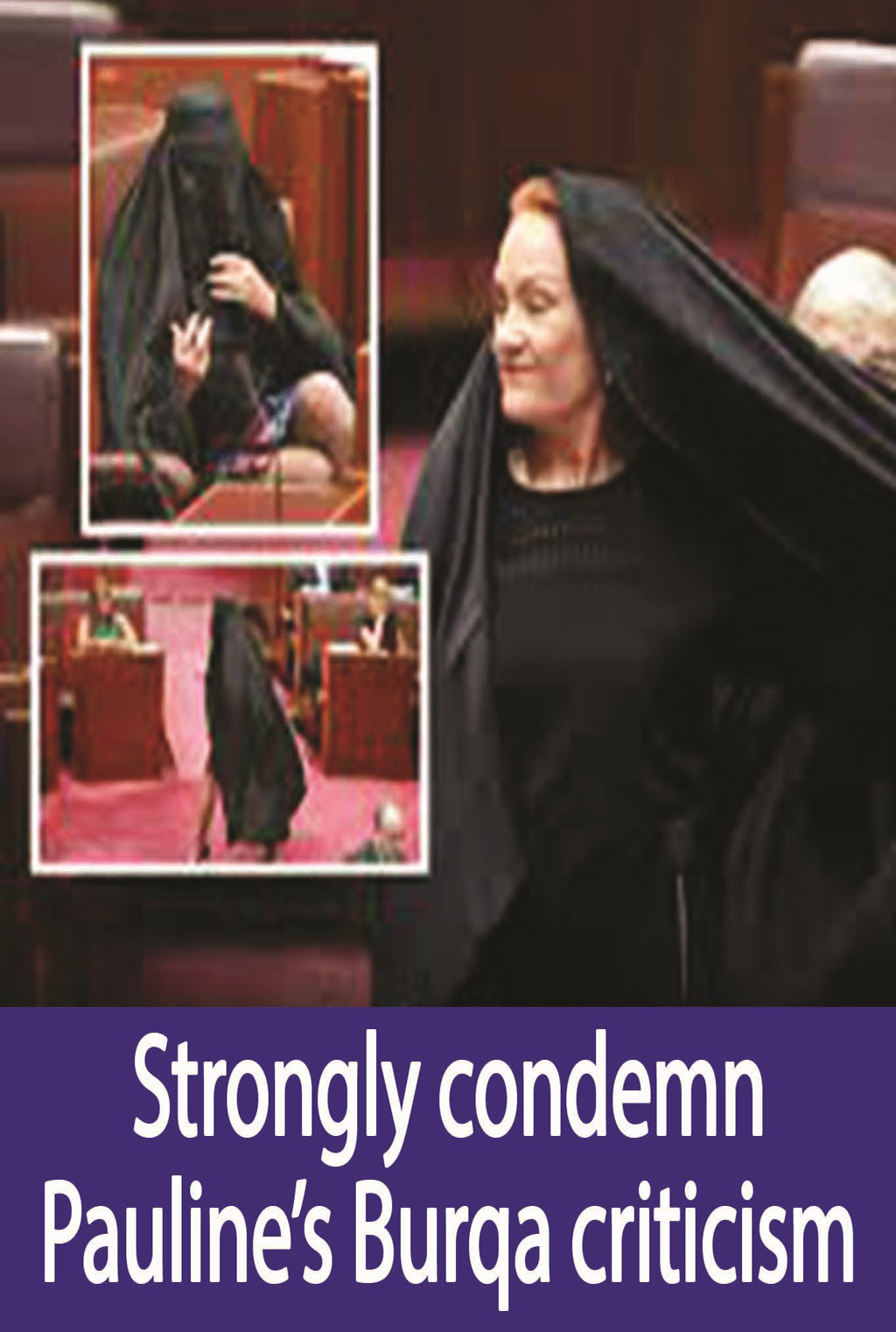
 Suprovat Sydney: In many Muslim communities, the burqa, hijab, or modest covering is considered both a spiritual practice and a social safeguard. The idea is rooted in Islamic teachings about dignity, modesty, and personal protection.
Holy Qur’an 24:31 instructs believing women to “draw their veils over their bosoms,” and Qur’an 33:59 tells believing women to “draw their cloaks close around them” when they go out.
O Prophet! Ask your wives, daughters, and believing women to draw their cloaks over their bodies. In this way it is more likely that they will be recognized ˹as virtuous˺ and not be harassed. And Allah is All-Forgiving, Most Merciful.
- A Symbol of Modesty and Faith
The burqa or hijab reflects a woman’s commitment to modesty an important value in Islam for both men and women. It represents obedience to Allah’s guidance and is seen as an outward sign of inner faith and moral character.In Islam, modesty is highly valued. The Qur’an instructs believing women to cover themselves in ways that reflect modesty (e.g., Qur’an 24:31, 33:59). Wearing the burqa can be seen as fulfilling this religious obligation, which is viewed as a form of respect toward God.
- Protection from Unwanted Attention
Covering is often viewed as a safeguard because it reduces unwanted or inappropriate gazes. The intention is not to restrict women but to create a respectful boundary in public spaces, allowing women to be valued for their character, actions, and intelligence rather than appearance.
- A Sign of Respect and Honour
In many Muslim cultures, a woman who dresses modestly is considered dignified and respectable. The covering symbolizes self-respect and signals to others that she values her honour and expects to be treated with dignity.In many societies, wearing the burqa is a social norm. Women who wear it may be seen as upholding community values and traditions. By conforming to these norms, they demonstrate respect for cultural expectations.
- Empowerment through Choice
For many Muslim women, choosing to wear the burqa or hijab is empowering. It allows them control over who sees their body and how they present themselves. It becomes a personal expression of identity, culture, and religious devotion.The burqa is intended to reduce the focus on physical appearance and emphasize inner qualities. By wearing it, a woman signals that she values modesty, dignity, and personal integrity qualities that are socially respected.
- Strengthens Moral and Family Values
Modest dress is also seen as a way to strengthen moral values in society. It promotes decency, reduces objectification, and encourages interactions based on mutual respect rather than appearance.Choosing to wear a burqa can indicate strong religious devotion. In many communities, religious devotion is highly respected, so the burqa becomes a visible symbol of that commitment.
It’s important to note that the perception of respect varies across cultures. In some places, the burqa is respected and valued, while in others it may be misunderstood or even viewed differently. The key idea is that it symbolizes adherence to spiritual, cultural, and moral principles.
Australia is a multicultural country, enriched by its diverse cultures, color, languages, and religions, which together create its unique beauty. Every individual has the right to practice their own culture, speak their language, and follow their religious beliefs peacefully. Likewise, every person has the right to choose their clothing or dress code according to their preference. Clothing is a personal choice, and no one has the right to dictate or criticize another person’s attire.
The burqa is a distinctive form of dress for pious Muslim women around the world, reflecting their faith, modesty, and devotion. It is a personal and cultural expression that deserves respect and understanding.
Anyone who argues against or criticizes the burqa in this civilized country is acting in a dogmatic and racist manner. On this Gadigal land, there is no place for racism. Pauline, whose name is remembered in Australian history for her controversial stances, is publicly abusing and disrespecting the burqa in a deeply offensive way. Her actions are divisive, creating unrest within the Muslim community, while other leaders have strongly opposed her dogmatic and harmful views.
As Australian Muslims, we strongly condemn her absurd and controversial views, and we sincerely thank all the leaders who stood firmly against her, promoting peace and unity instead of division.