 Professor Shafiqur Rahman (PhD), Special Correspondent
Australia’s Greatest Strength Is Its People
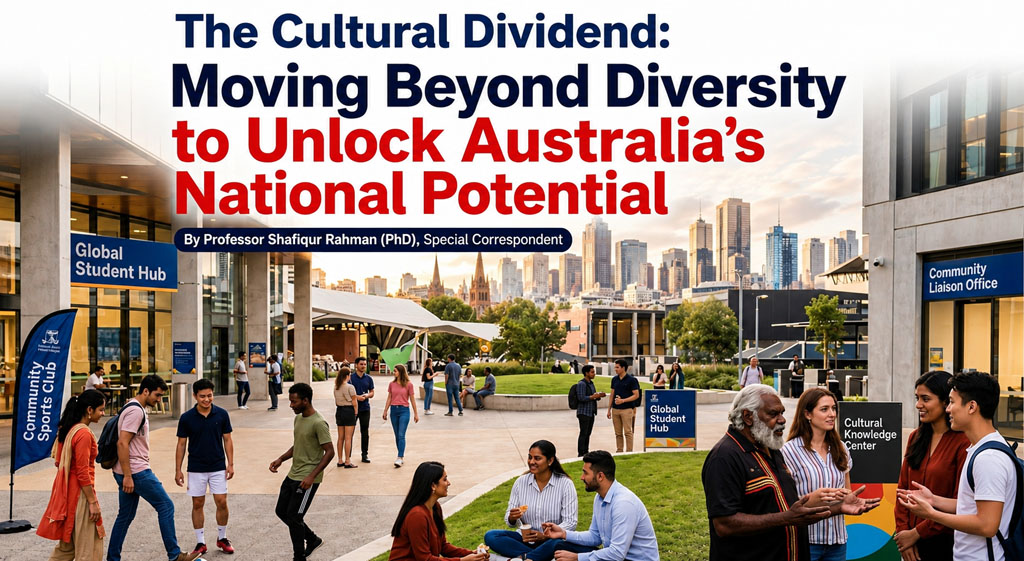
Australia is widely recognised as one of the world’s most successful multicultural nations. People from many countries have chosen Australia as their home. They bring different languages, traditions, beliefs, skills, and experiences. This diversity can be seen in schools, workplaces, universities, hospitals, sporting clubs, and neighbourhoods across the country. Cities such as Sydney, Melbourne, Brisbane, Perth, and Adelaide reflect this rich mix of cultures every day. Yet diversity alone is not enough. A nation benefits most when everyone feels included and has the opportunity to contribute. Australia now has the chance to move beyond simply celebrating diversity and unlock what experts call the cultural dividend—the lasting social, economic, and cultural benefits created when people from different backgrounds work together.
- Understanding the Cultural Dividend
The cultural dividend is more than having many cultures living in one country. It is about the value created when people share ideas, solve problems together, and learn from one another. It asks a simple question: how can Australia use its cultural diversity to build stronger communities, a better economy, and a more innovative future? The answer lies in inclusion. When people feel respected and valued, they are more willing to contribute their knowledge and creativity. Diversity becomes more than a statistic. It becomes a national advantage that benefits everyone.
- Everyday Life Shows the Power of Diversity
The cultural dividend is already visible across Australia. Walk through almost any suburb and you will see businesses from many cultural backgrounds. A Bangladeshi grocery shop may sit beside a Lebanese bakery, an Indian restaurant, a Chinese medical clinic, or a Nepalese café. These businesses create jobs, support local families, and add life to neighbourhoods. Australia’s food culture has become richer because people have shared their traditions. Cultural festivals such as Lunar New Year, Eid, Diwali, Christmas, and Harmony Week bring communities together. They encourage people to learn about one another and reduce misunderstanding through shared experiences.
- Diverse Workplaces Build a Stronger Economy
Australian workplaces also benefit from cultural diversity. People with different backgrounds often approach challenges in different ways. They ask new questions and suggest fresh ideas. This improves problem-solving and encourages innovation. Diverse teams are often better prepared to serve international customers because employees understand different languages, cultures, and business practices. Australia’s technology sector, healthcare system, education sector, and many growing industries depend on talented people from around the world. Their knowledge helps Australian businesses compete globally and creates new opportunities for economic growth.
- Education and Migration Create Lasting Value
Education plays a major role in building Australia’s cultural dividend. International students contribute to the economy while creating classrooms filled with global perspectives. Australian students learn alongside classmates from many countries. They develop communication skills, cultural awareness, and a broader understanding of the world. Migration also strengthens the nation. Skilled migrants work in healthcare, engineering, construction, information technology, hospitality, agriculture, and education. Many also establish successful businesses that create employment and introduce new ideas. Their resilience and determination continue to shape Australia’s future.
- Inclusion Turns Diversity into Opportunity
Despite these achievements, challenges remain. Many skilled migrants struggle to have overseas qualifications recognised. Others face language barriers, unconscious bias, or limited leadership opportunities. When talented people cannot fully use their skills, Australia loses valuable knowledge and experience. Inclusion is therefore essential. Diversity means people are present. Inclusion means they are respected, heard, and given equal opportunities to succeed. Fair recruitment, mentoring, leadership development, and culturally responsive public services can help unlock the full potential of every Australian.
- Building Stronger Communities Together
The cultural dividend also grows through everyday community life. Trust develops when people meet, work together, and build friendships. Sporting clubs, schools, libraries, volunteer organisations, and community centres all help bring Australians together. Simple activities such as sharing a meal, joining a local event, or helping a neighbour can strengthen social cohesion. Australia also benefits from recognising the unique contribution of Aboriginal and Torres Strait Islander peoples. Their cultures, knowledge, and connection to Country are central to Australia’s identity and enrich the nation’s understanding of community, resilience, and sustainability.
- A Shared Vision for Australia’s Future
Australia’s future success will depend on innovation, knowledge, creativity, and strong global connections. Cultural diversity provides an important foundation for all of these. Young Australians are already growing up in multicultural classrooms and communities. They are learning to work across cultures and think globally. Government, businesses, schools, universities, community organisations, and individual citizens all have a role in creating an inclusive society where every person has the opportunity to contribute. Australia has already shown that multiculturalism works. The next step is to transform diversity into lasting national prosperity. When every voice is heard, every skill is valued, and every culture is respected, Australia unlocks its greatest resource—its people. That is the true cultural dividend and one of the country’s greatest opportunities for the future.