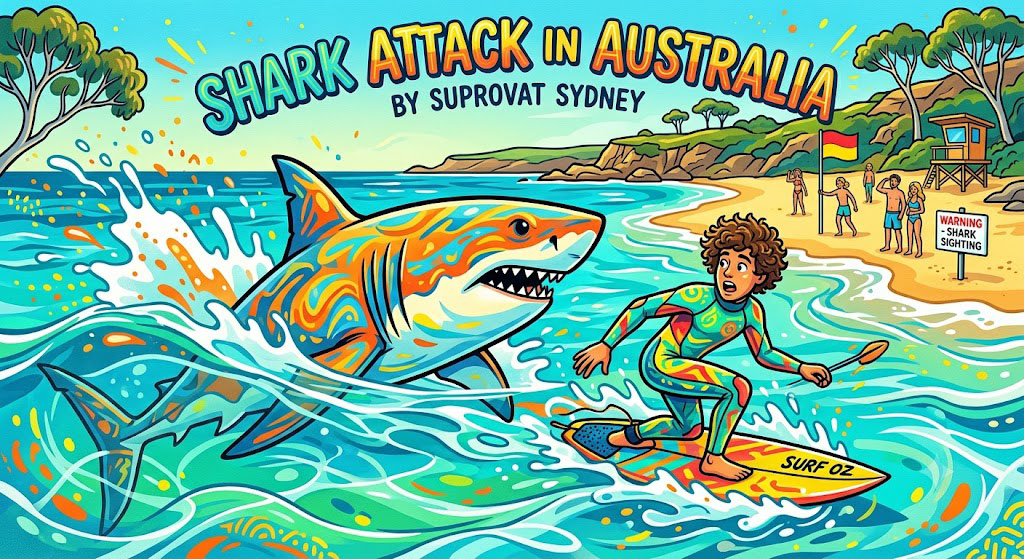
 By Suprovat Sydney: Australia’s coastline is legendary, drawing millions of locals and tourists to its pristine surf and golden sands every year. Yet, this deep-seated beach culture coexists with a stark reality: Australia’s waters are home to some of the world’s most formidable marine apex predators. When a shark attack occurs, it inevitably dominates national headlines, igniting intense public debate over ocean safety, environmental conservation, and the raw predictability of nature.
While the mathematical probability of being bitten remains remarkably low, recent spikes in shark activity have brought the issue back to the forefront. Understanding the data behind these incidents, recognizing who is most at risk, and learning how to minimize encounters are crucial steps for anyone stepping into the Australian surf.
The landscape of Shark encounters in Australia
Statistically, Australia records an average of roughly 20 to 27 unprovoked shark incidents per year, with fatalities historically averaging between two and three annually. However, recent years have seen unsettling upticks. For instance, spiked numbers of unprovoked attacks and clusters of serious incidents such as a series of highly publicized bites within short timeframes in New South Wales have rattled coastal communities.
Marine biologists point out that these fluctuations are often driven by environmental anomalies rather than a sudden thirst for human prey. Factors such as warming sea temperatures, surges in coastal fish populations (like Australian salmon or pilchards), and migrating whale corridors bring apex predators much closer to the shore.
Three primary species are responsible for the vast majority of serious and fatal encounters in Australian waters:
- The Great White Shark: Typically encountered in the cooler, temperate southern waters spanning from Western Australia, around the southern coast, and up through New South Wales.
- The Bull Shark: Highly adaptable and notorious for frequenting warm, murky waters, estuaries, and river mouths, particularly after heavy rainfalls.
- The Tiger Shark: Prevalent in the tropical and sub-tropical waters of northern Australia, heavily attracted to warm currents.
Who Are the Victims?
Shark attacks do not happen at random across all ocean users. The data from the Australian Shark Incident Database reveals a distinct demographic pattern regarding who interacts with these predators.
PRIMARY SHARK ENCOUNTER RISK GROUPS
————————————————————-
[Surfers & Board riders] –> Highest risk (surface profile)|
[Spearfishes & Divers] –> Moderate risk (provoked/prey)
[Swimmers & Waders] –> Lower risk (unless murky water)
- Surfers and Board riders (The Highest Risk Group)
Surfers, body boarders, and windsurfers account for the highest percentage of unprovoked shark bites. The reason is twofold: positioning and geography. Surfers spend hours sitting stationary or paddling on the surface, often past the first line of breaking waves and near deep drop-offs or sandbars where sharks naturally hunt. From below, the silhouette of a surfboard with dangling arms and legs can mimic the surface profile of a seal or a sea lion a primary food source for large Great Whites.
- Swimmers and Ocean bathers
While swimmers represent a massive portion of beachgoers, they account for fewer attacks than surfers. However, when swimmers are targeted, it is frequently due to a case of mistaken identity in low-visibility water or swimming too close to deep channels. Recent high-profile cases, such as an attack on a swimmer at Sydney’s Coogee Beach, underscore that even swimming relatively close to the shore can carry risk if environmental conditions shift.
- Spearfishes and scuba divers
Encounters involving divers and spearfishes are frequently categorized as “provoked”. Spearfishes intentionally introduce blood, stress signals, and thrashing fish into the water column. Sharks possess an incredibly sophisticated electro sensory system and an acute sense of smell; they are quickly drawn to the scene to scavenge the catch, resulting in high-stakes underwater confrontations.
In Australia, shark encounters are heavily influenced by geography, water temperature, and regional marine ecosystems. While the overall risk of an encounter remains incredibly low, the Australian Shark Incident Database highlights specific states and coastal regions that record the highest activity.
The breakdown of the primary shark attack hotspots in Australia by state and specific region highlights where these encounters occur most:
- New South Wales (NSW) Highest Total Volume
New South Wales historically records the highest number of total shark attacks in Australia. This is largely due to the sheer volume of people using the water particularly surfers along its densely populated coastline.
- The Hotspots:
- The Mid-North Coast & Northern Rivers: Stretches around Byron Bay, Ballina, Coffs Harbour, and Crescent Head. Ballina, in particular, gained international attention after a cluster of serious White shark incidents over the past decade.
- Sydney Beaches & Harbor: Areas like Little Bay, Coogee Beach, and parts of Sydney Harbour (such as Elizabeth Bay and Vaucluse).
- The Sharks Involved: Juvenile and sub-adult Great White Sharks frequent the NSW coast heavily during the cooler winter and spring months. Bull Sharks dominate the warmer harbor waters and estuaries, especially during the summer months.
- Western Australia (WA) Highest Fatality Rate
While NSW gets more total incidents, Western Australia has developed a reputation for having some of the most severe and fatal encounters in the world.
- The Hotspots:
- Esperance & the South Coast: Towns like Esperance (specifically Kelp Beds and Wylie Bay) and Albany are major focal points. Esperance’s massive, deep-water kelp forests and nearby seal colonies create a prime hunting ground for apex predators.
- The South-West (Margaret River Region): Areas like Grace town have seen multiple serious attacks over the years.
- Perth Coastal Waters: Beaches like Port Beach (Fremantle) and Mindarie.
- The Sharks Involved: Large, migratory Great White Sharks are responsible for the vast majority of incidents here. Their presence closely correlates with the annual whale migration paths along the coast.
- Queensland (QLD) The Tropical Species Hub
Queensland has a well-established shark control program (including nets and drumlines), but its vast, warm coastline naturally attracts highly predatory tropical species.
- The Hotspots:
- The Gold Coast & Sunshine Coast: Popular surf hubs like Greenmount Beach.
- Whitsunday Islands & Offshore Reefs: Popular snorkelling and spearfishing regions where deep water meets coral drop-offs.
- Far North Queensland: Remote islands and reefs near Cairns and the Torres Strait.
- The Sharks Involved: Tiger Sharks thrive in the warm tropical waters of northern Queensland, making this region one of the global focal points for Tiger shark activity. Bull Sharks are also incredibly common around Gold Coast canals and river systems.
- South Australia (SA) The Great White Territory
South Australia sees far fewer total incidents than the eastern states, but when an attack does happen, it is almost exclusively involving large apex predators.
- The Hotspots:
- The Eyre Peninsula & West Coast: Remote, wild surf breaks like Streaky Bay, Elliston, and Walkers Rocks.
- The Yorke Peninsula: Areas like Ethel Beach.
- The Sharks Involved: Great White Sharks. The cold waters of the Southern Ocean and massive colonies of Australian sea lions make South Australia a permanent home for some of the largest Great Whites in the country.
Safety Reminder: No matter which state you are in, the absolute safest place to swim is always between the red and yellow flags at a patrolled beach, where lifeguards use drones, helicopters, and visual scanning to spot sharks early.
How to Prevent Shark Attacks: Personal and State Strategies
Preventing shark attacks requires a dual approach: government-led mitigation and personal responsibility. Because the ocean is a wild, untamed environment, a 100% guarantee of safety does not exist, but risk can be mitigated to near-zero by making smart decisions.
Personal Safety Guidelines (Be Shark Smart)
State governments across Australia, alongside organizations like Surf Life Saving, urge ocean users to adopt the following behavioural rules:
- Swim Between the Red and Yellow Flags: Always Patrolled.
Lifesavers and lifeguards constantly monitor patrolled areas using towers, jet skis, and specialized drones to spot silhouettes from the air. If a shark is sighted, alarms are sounded to clear the water immediately.
- Avoid Dawn, Dusk, and Night-time: Feeding Windows.
Many large shark species become highly active ambush predators during low-light hours. Human visibility is severely limited at these times, whereas sharks utilize specialized vision and lateral lines to hunt effectively.
- Steer Clear of River Mouths and Murky Water: Post-Rain Hazard.
Heavy downpours wash organic debris, nutrients, and dead land animals into river systems, which then empty into the sea. This attracts baitfish, which in turn attract bull sharks. Murky water reduces visual clarity, increasing the chance of an accidental bite.
- Look for Wildlife Indicators: Bait Balls & Seabirds.
If you see schools of small fish tightly packing together (bait balls) or seabirds diving steeply into the water, leave the area. A feeding frenzy is likely occurring just beneath the surface. Note that the presence of dolphins does not mean sharks aren’t around—they often hunt the same prey.
Technology and Personal Deterrents
For surfers and divers who naturally operate outside the flags, technology has stepped in to fill the gap.
- Electrical Deterrent Devices: Devices that emit powerful underwater electrical pulses can temporarily disrupt a shark’s highly sensitive ampulla of Lorenzini (electro sensors). Independent scientific testing has shown that high-quality, verified electrical deterrents attached to surfboards or ankles can significantly reduce the likelihood of a shark approach.
- Bite-Resistant Wetsuits: New fabric technologies incorporating high-tensile materials like Kevlar or heavy sailing fibers are being engineered. While they don’t prevent an initial bite, they drastically reduce deep lacerations and arterial punctures, mitigating catastrophic blood loss the primary cause of shark attack fatalities.
Emergency First Aid: If an attack does occur, stopping the bleeding immediately via direct pressure or an emergency tourniquet is the single most critical factor for survival. Across states like New South Wales, public “Shark Bite Trauma Kits” have been systematically rolled out to dozens of surf clubs to give first responders immediate access to life-saving medical gear.
Ultimately, the goal of modern marine management in Australia is balance. Through the combination of real-time drone surveillance, tagged shark listening stations, personal safety devices, and public education, humans can continue to enjoy the ocean while respecting the predators that keep the marine ecosystem healthy and whole.