 Columnist Nozaina: Teenagers spend nearly 5 hours a day on social media platforms like TikTok, Instagram, Youtube, WhatsApp, Telegram, Snapchat, and Facebook. Social media has become a main part of teenagers’ daily routine. At the same time, social media overcomes the barrier of time and distance. People can connect with their colleagues, family, and friends worldwide. Social media affects self-esteem and mental health. Mindless scrolling has a strong negative link with teenagers’ mental health. It’s a habit of continuously and passively consuming digital content like short-form videos, news, and social media feeds without paying attention.
Adolescence is a critical developmental stage. During this stage, teenagers’ form their identities, seek validation, and are vulnerable to social influences. Social media significantly affects their self-esteem. Several factors contribute to how social media use affects self-esteem.
Unrealistic body image portrayals on social media have the most profound impact on teenagers. AI filters and digital photo editing promote unattainable beauty standards, which lead to lower self-esteem and body dissatisfaction. Research has revealed that constant comparison of bodies seen online is related to negative emotional outcomes.
A 2025 study revealed that addiction to social media is associated with intense negative emotions in adolescents. The portrayal of unrealistic body images on social media is one of the most pressing issues. Teens are exposed to edited images, filtered photos, and beauty standards that do not reflect reality. These portrayals cause low self-esteem and body dissatisfaction. Research shows that people who compare their physical appearance to what they see on social media are more stressed. Research also demonstrates a strong link between negative emotions and excessive use of social media, specifically related to eating disorders and body image.
Another concern is cyberbullying, which has become more prevalent on social media platforms. Online shaming and teasing deeply affect teens’ self-worth. Constant comparison can lead to self-doubt and a feeling of inadequacy. Research suggests that comparing their physical appearance with others on social media is a main factor in the development of low self-esteem. Curated or edited content worsens this comparison and sets unrealistic standards. The most prevalent issues on social media among teens are social comparison and cyberbullying, including unrealistic body standards.
Harassment, teasing, and exclusion can deeply affect the mental health and self-worth of teenagers. Teenagers also compare their bodies, lives, and achievements to others, which can lead to feelings of inadequacy. A 2023 review highlights that teens who engage in comparison and frequently use social media experience lower self-esteem, mental distress, and self-doubt. Constant comparison intensifies negative emotions.
Positive Impact of Social Media
Although social media has many drawbacks, it also offers benefits such as support, self-expression, and connection that can boost teenagers’ self-esteem. Social media motivates and supports teens by connecting them with peers who share similar goals, interests, and struggles. Teens find motivation in shared experiences and are inspired by peers’ achievements. Social media provides a sense of belonging because it provides a source of connection for teens who feel isolated in their offline environment. It also allows them to find a sense of acceptance and community. Social media provides them with an opportunity to express themselves. They may engage in mental health activism and campaigns, which increases their self-confidence.
Negative Impact of Social Media
Social media can negatively affect self-esteem. It can damage the mental health of teenagers when misused or overused.
One of the major issues on social media is cyberbullying. Anonymity on social media platforms can lead to cruel behaviour that wouldn’t happen in face-to-face interactions. Cyberbullying can lead to self-harming behaviours, anxiety, and depression. Online targeted teens develop negative self-beliefs and internalise hurtful comments. Peer pressure may cause self-doubt and anxiety because it can compel teens to meet impossible societal expectations.
Overuse of social media is associated with anxiety, depression, and stress. A systematic review of 2023 suggests that excessive use of social media may contribute to heightened mental distress.
There is a strong connection between social media use and self-harming behaviour, mental distress, and suicidality. These mental health issues undermine teenagers’ self-esteem. They start to question their worth based on online standards.
Social media also affects the sleep quality of teens who spend a lot of time on social media apps. Inadequate sleep can worsen self-esteem, mood, and cognitive function.
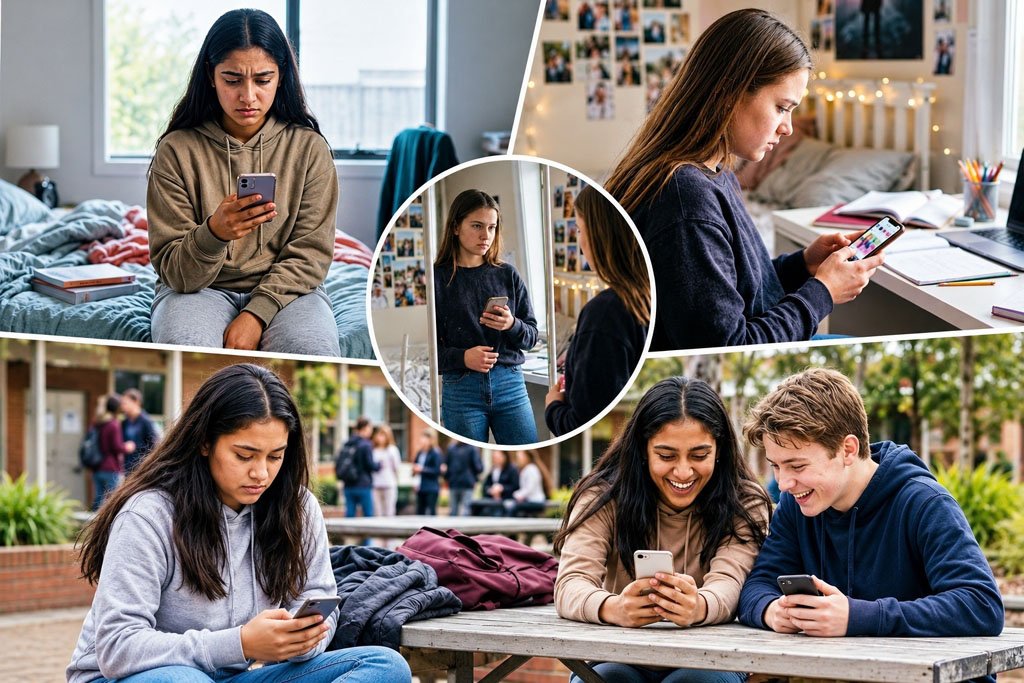
Here are some signs that can help parents recognise that teenagers are struggling with low self-esteem.
- Negative self-criticism
- Difficulty setting goals
- Withdrawal from social activities
- Increased anxiety associated with social situations
Parents can help teens develop healthy relationships with social media. Encourage them to set healthy boundaries for social media use and limit screen time, especially before bed. According to research, less screen time can mitigate some negative effects on mental health and self-esteem. Ensure their online interaction does not interfere with their schoolwork, face-to-face relationships, and sleep. Educate them to use apps that track screen time and remind them to log off.
It’s important for parents to stay involved with teen well-being and mental health. Communicating with them encourages them to share their feelings. Ensure they are not alone; help is always available if they feel overwhelmed. Discuss the advantages and disadvantages of social media with them. Encourage them to follow role models who promote kindness, body positivity, and mental health awareness rather than content that encourages comparison.