Columnist Nozaina : Unfortunately, most of the children do not follow healthy eating patterns. Healthy eating is most important for the proper growth and development of children. Children aged 2 years or above must follow a healthy diet that includes whole grains, various vegetables and fruits, low-fat and fat-free dairy products, oils, and protein-rich foods. Limit intake of added sugars, salt, and solid fats, which are major sources of trans- and saturated fatty acids. It’s also important for parents to introduce healthy food to children. Healthy eating habits help to maintain and achieve a healthy body weight, consume healthy nutrients, and decrease the risk of developing diseases.
School-aged children should eat from all five basic food groups for balanced nutrition.
Food groups are fruits, vegetables, legumes, dairy and dairy alternatives, cereals, grains, and protein sources such as meat and meat alternatives. Nutritious foods provide essential nutrients that support the learning, growth, and development of children. Limit the intake of drinks high in caffeine and sugar and foods high in sugar, fat, and salt. Healthy eating is crucial in childhood for cognitive development, physical growth, and setting up long-term habits. School-age children aged between 5 and 12 need a balanced diet rich in essential nutrients to support the immune system, fuel their activities, and also help them to concentrate during learning hours.
Educators, carers, and parents can support healthy eating choices by understanding the nutritional requirements of children. They can create a positive food environment because children learn from their surroundings.
Nutritional Needs for School-Age Children
There are some nutrients that are essential for children. As children grow and become more active, their nutritional requirements change.
Here are some key nutrients that are particularly important for school-age children.
Carbohydrates: The primary energy source for the muscles and the brain. Prefer complex carb sources such as vegetables, fruits, and whole grains over refined sugars.
 Protein: Vital for immune function, muscle growth, and tissue repair. Eggs, fish, lean meat, dairy products, and beans are excellent sources of protein.
Fats: Choose healthy fats that are found in seeds, avocados, nuts, and olive oil. Fats are vital for the absorption of fat-soluble vitamins and the development of the brain.
Calcium: Calcium is crucial for the growth of strong teeth and bones. Good sources of calcium are yogurt, milk, cheese, fortified plant-based milks, and green leafy vegetables.
Iron: Iron is important for healthy blood and energy levels. Lentils, red meats, beans, green leafy vegetables, and fortified cereals are excellent sources of iron.
Minerals and vitamins: Minerals such as zinc and magnesium, as well as vitamin B complex, C, A, and D, are vital for immune support and overall health. Encourage children to eat various colourful vegetables and fruits.
Balanced Plate for Children
A balanced plate includes the following components:
Whole Grains: Include a portion of whole grains such as oatmeal, quinoa, brown rice, or whole-grain bread to provide fibre and energy.
Lean Protein: Add chicken, beans, nuts, eggs, or fish. They are an excellent source of protein.
Fruits and Vegetables: Fill half of the plate with a variety of colourful vegetables and fruits to provide a wide range of minerals and vitamins.
Dairy or Dairy Alternatives: Add cheese, milk, yogurt, and plant-based fortified alternatives because they are good sources of calcium and vitamin D.
Healthy Snack Options
Children often need snacks between meals. Snacks must be nutrient-dense, not calorie-dense. Healthy snacks include:
- Whole-grain crackers and cheese because they provide calcium and protein.
- Vegetables and fruit with dips, such as carrots, apples, and bell pepper slices paired with yogurt dip, provide healthy fats, fibre, and vitamins.
- Fresh fruit with Greek yogurt provides natural sweetness and extra protein.
- An apple or a banana with peanut or almond butter is packed with protein and healthy fats.
- A mix of seeds and nuts and a few dried fruits offers fibre, healthy fats, and protein.
School Lunch Ideas
Nutritious school lunch ensures children get a balanced meal even during school days. Here are some healthy, balanced lunch ideas:
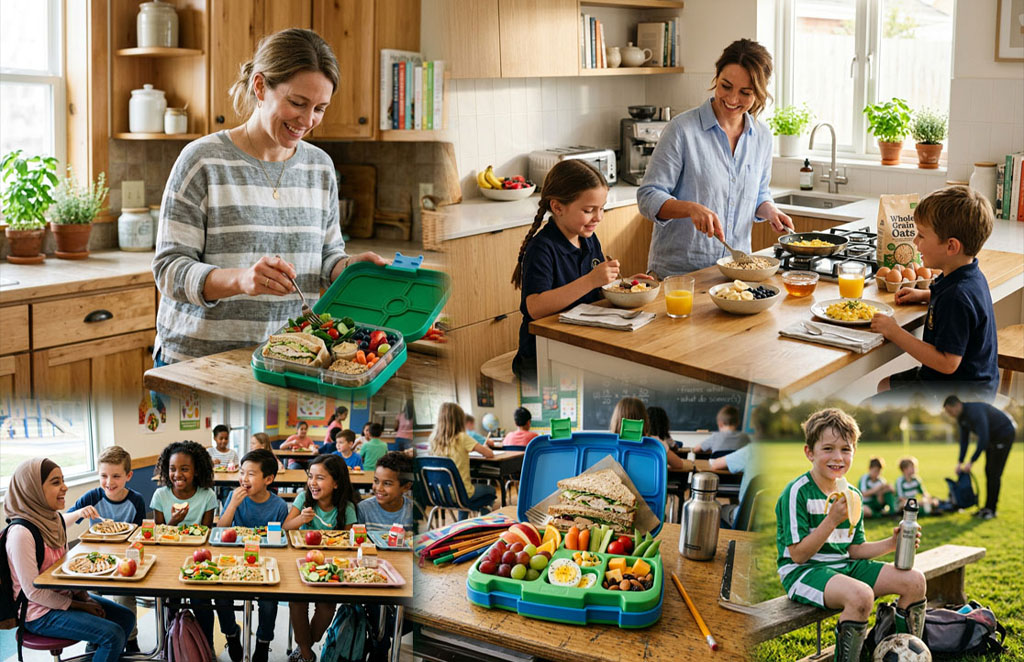
Pasta Salad: Add vegetables like bell peppers, cucumber, and cherry tomatoes to chickpea or whole-grain pasta, and add beans or grilled chicken.
Bento Boxes: Pack small portions of different foods, such as cheese, fruit, vegetables, whole-grain crackers, and beans or chicken. This combo will let children enjoy a balanced meal.
Sandwiches: Use whole-grain bread, fill them with chicken and vegetables, and spread them with hummus.
Leftovers: Leftovers from dinner, such as grilled chicken, brown rice with beans, or whole-grain pasta with vegetables.
Water: Sugary drinks are high in calories but offer no essential nutrient. Limit sugary drink intake and encourage hydration with water.
- Pack a water bottle for school.
- Add a few slices of cucumber or fruit to water for flavour.
Teach children healthy eating habits and choices. The environment of the home plays an important role in shaping the choices of children. There are many ways to promote healthy eating habits. Involving children in grocery shopping and simple food preparation helps them build skills and makes them enjoy food. Regular family meals create an opportunity for positive conversation about food, provide stability, and encourage mindful eating. Show excitement for trying new food, eat a balanced diet, and stay hydrated. Encourage listening to hunger cues, such as teaching them to eat when hungry and stop when they are satisfied. It will help them to build healthy relationships with food.
Initiating healthy eating habits during school years builds the base for long-term health. An understanding of nutrition, a well-rounded diet, and a positive connection with food can help children grow up feeling confident about making food choices that support their mental and physical well-being.