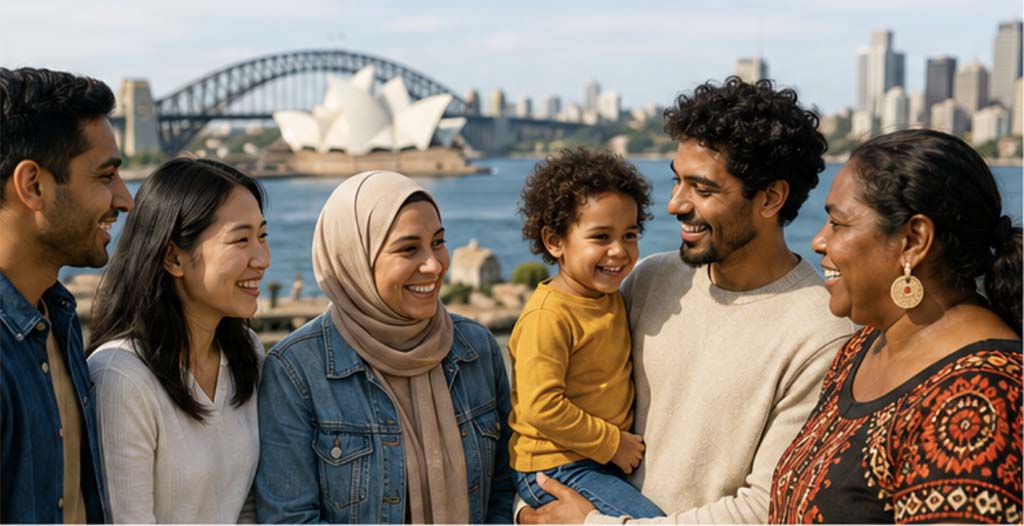
 Professor Shafiqur Rahman, Special Correspondent: Australia is one of the most culturally diverse countries in the world. But today, the conversation is changing. The real question is no longer whether Australia is diverse. The real question is whether the country is using that diversity to build a stronger future. From the outside looking in, it is clear that Australia is slowly discovering the real value of its multicultural society. Diversity is no longer only about representation or fairness. It is increasingly becoming one of Australia’s greatest national strengths. This growing advantage can be called the “cultural dividend” — the social, economic and creative benefits a country gains when people from different backgrounds are able to contribute fully to society.
A Country Built on Many Cultures
Australia’s story has always been shaped by migration. People from different parts of the world have helped build the country’s economy, communities and identity. Today, more than one quarter of Australians were born overseas, and hundreds of languages are spoken across Australian homes.
In cities like Sydney and Melbourne, multiculturalism is part of everyday life. Different cultures can be seen in schools, workplaces, restaurants, festivals and neighbourhoods. A person may hear several languages while travelling through one suburb. Food from every part of the world has become part of Australian life. Cultural celebrations are no longer limited to one community. They are shared and enjoyed by many Australians.
This diversity is not just something people see. It is influencing how Australia thinks, grows and connects with the world.
Australian sport, music, arts and business are becoming more multicultural every year. Universities attract students from across the globe. Young Australians are growing up in classrooms with classmates from many different cultures and religions. As a result, many are becoming more globally aware and open-minded.
Diversity Alone Is Not Enough
Still, diversity by itself does not automatically create a strong society. A country can be multicultural on paper while communities remain disconnected in reality. Australia’s next challenge is to move beyond simply celebrating diversity and focus more on building real inclusion and connection. People from different backgrounds need equal opportunities to participate in society. They need access to education, employment and community life. They also need spaces where they can interact with others and feel respected. When people work together, study together and share daily experiences, trust grows naturally. That trust is important because it strengthens social harmony and reduces division. Australia’s success in the future will depend not only on how diverse it becomes, but also on how united it remains.
The Economic Value of Diversity
Australia is already receiving major benefits from its multicultural population. Migrants contribute strongly to the workforce, especially in areas such as healthcare, technology, engineering and education. Many sectors facing worker shortages rely heavily on skilled migrants.
At the same time, multicultural communities contribute strongly to business and entrepreneurship. Across Australia, migrant-owned small businesses are helping local economies grow. These businesses create jobs, attract customers and bring new ideas into the market.
Cultural diversity also helps Australia build international relationships. Communities with ties to Asia, the Middle East, Africa and Europe strengthen Australia’s trade and tourism connections. In a global economy, these cultural links are extremely valuable.
International education is another major example. Students from different countries contribute not only financially to Australia, but also socially and academically. They help universities become more internationally connected and culturally rich.
Creativity, Ideas and Innovation
One of the biggest strengths of diversity is its ability to generate creativity and innovation. People from different backgrounds often think differently because they have different life experiences. When these perspectives come together, new ideas emerge.
This is becoming increasingly visible in Australia’s creative industries. Australian food culture, music, film, fashion and literature are becoming more diverse and internationally recognised. Multicultural influences are helping Australian cities become more vibrant and globally connected.
Diverse workplaces are also often better at problem-solving because they bring multiple viewpoints into discussions. In a rapidly changing world, this flexibility can become a major national advantage.
Young Australians growing up in multicultural environments may also be better prepared for the future global economy. Many are already comfortable interacting with people from different cultures. This ability will become increasingly important in international business, diplomacy and leadership.
Challenges Australia Still Faces
Despite many positive developments, challenges remain. Some communities still experience discrimination, social exclusion or difficulties finding equal opportunities. Migrants may struggle with language barriers or recognition of overseas qualifications. Housing pressures and economic stress can also create social tensions.
There is also the risk that communities may become isolated from one another if there is limited interaction. Diversity without connection can sometimes create misunderstanding instead of unity. For this reason, leadership matters. Governments, schools, media organisations and community groups all have an important role in building trust and encouraging inclusion. Australia cannot simply assume multiculturalism will succeed automatically. It requires continuous effort and long-term thinking.
Looking Beyond the Present
The long-term benefits of cultural diversity may be even greater than the benefits Australia is experiencing today. The modern world rewards countries that are adaptable, innovative and internationally connected. Australia already has many of these advantages because of its multicultural society.
Diversity also helps societies become more resilient. People who are exposed to different cultures and viewpoints often become more flexible in responding to change. In a world facing technological disruption, global migration and climate challenges, this resilience is increasingly valuable. Australia’s multicultural identity may therefore become one of its greatest strengths in the decades ahead.
Conclusion
Australia is entering a new stage in its multicultural journey. Diversity is no longer simply part of the country’s social identity. It is becoming part of its national potential. The cultural dividend is not only about economic growth. It is about building a society where different communities feel connected, respected and able to contribute together. Australia’s future success will depend on whether it can continue turning cultural diversity into trust, creativity, innovation and social unity. If it succeeds, multiculturalism will not simply describe modern Australia. It will help shape the country’s future place in the world.